

The business of beautiful bullsh*t
and how we've all been suckered into paying $47 for soap

Substack showed me a photograph of a pair of scissors a couple of weeks ago, and I tapped that heart and saved it before I had even finished reading the caption. I’ve been looking at it on and off for three days, overthinking the hell out of it.
You're about to do the same.
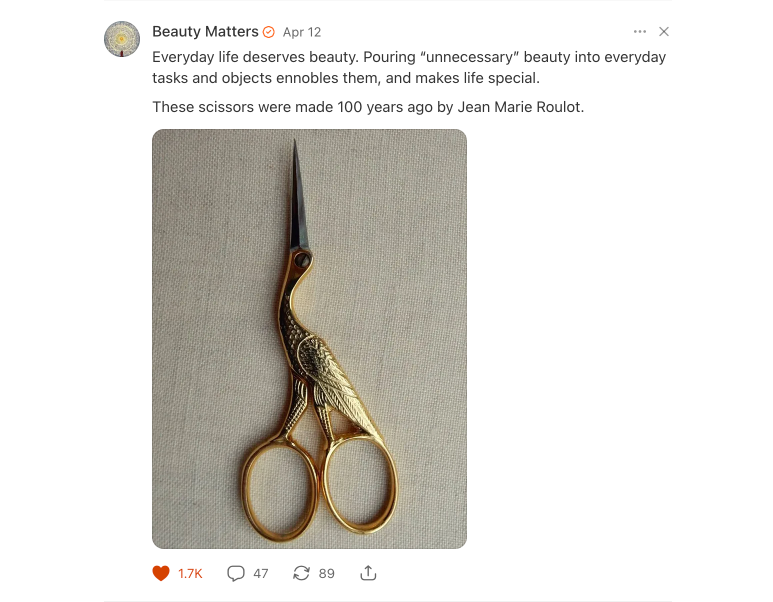

here’s what i’m overthinking
Those d*mn scissors that captured my heart
Why we don’t deserve (or get) nice things anymore
$135 candles?? What is going on, people?!
How you can sell your own beautiful bullsh*t
⏲️ Read time: 20 minutes. We’re goin’ deep in this one!
The photograph was of a pair of embroidery shears. Specifically, a stork model made in the 1930s by a craftsman named Jean-Marie Roulot (May 26, 1936 – October 7, 2023), out of a small French town in the Haute-Marne called Nogent-en-Bassigny.
The algorithm apparently knew the nutbag design enthusiast it was dealing with by showing that image to me.
So here’s what I found out during this particular rabbit hole. Nogent had been the center of European scissor-making since the sixteenth century, at its height producing roughly 80% of all embroidery shears used across the continent, and Roulot was the last master of a craft that had been running for four hundred years.
His stork shears are four inches long, hand-forged from steel, and the handles are engraved with a bird in flight. Every pair took weeks to complete. Any pair you find is likely an original from the 1930s, and the kind that surfaces occasionally at auction, will run you somewhere north of $1,000 today.
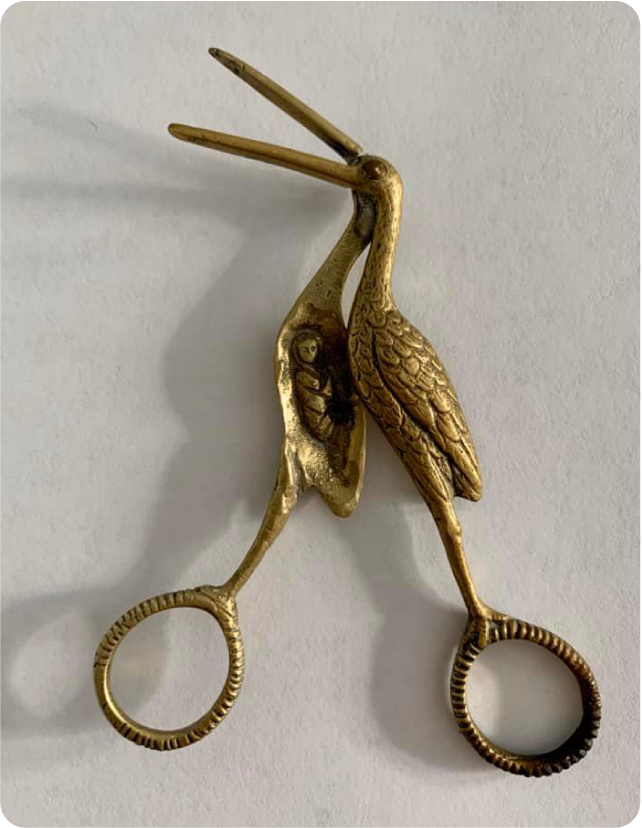
Sidenote, have you ever wondered why embroidery scissors are shaped like storks? Yeah, me neither. But as Susan K. Mossman shared on her Weird Secondhand Finds Facebook post, they didn’t start out as scissors, but as umbilical clamps. Some even had little babies hidden inside the stork’s beak that would appear when the clamps were opened.
Then midwives began to use the scissors for needlework that they carried with them to work on during long waiting times when babies were being born.
Needless to say, the people bidding on Roulot scissors are not collectors who want something behind glass. They’re embroiderers and craftspeople and history lovers. People who have held a pair before and can’t stop thinking about it, because even the most utilitarian part of the work, the tool used to cut thread, was once made with the same seriousness as the embroidery itself.

I know I’m getting way too into this, but the part I keep returning to from what I learned about the shears is what happened to the tradition in between. When France entered the Second World War, Nogent’s steel was redirected to the war effort and the town’s scissor-making knowledge stopped transmitting almost entirely.
After the war ended, Roulot revived the craft largely alone, working by hand at a moment when every economic pressure was pointing toward mechanization. He spent the rest of his working life as the last person in France who knew how to make them the way they had always been made.
My heart genuinely fluttered when I saw the photograph, which I want to acknowledge is a slightly undignified reaction to scissors. Fine. BUT I think the flutter was pretty accurate. What I was responding to was not beauty in the decorative sense. What I was responding to was the fact that someone once thought the quality of your daily life was a legitimate reason to spend weeks on four inches of steel.
Most of that world is gone now, but the appetite for what it offered never went with it.
paradise lost
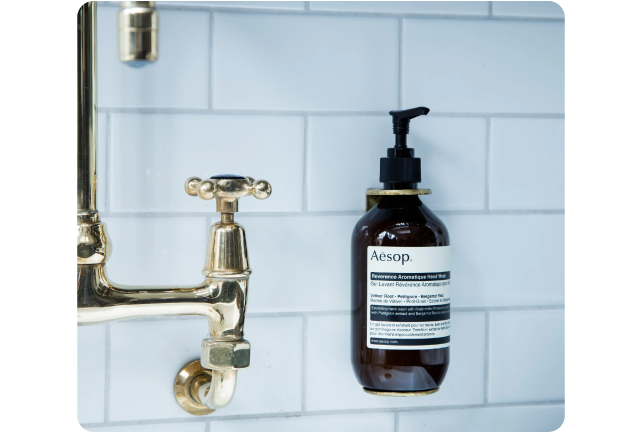
Which brings me, at last, to Aesop. I have a bottle of Resurrection hand wash on my bathroom sink ($47, from a store that smells like a philosophy professor’s library and is designed to make you feel vaguely guilty that your life has not been more intentional up until now).
I have a Trudon candle on the coffee table that cost $135, technically a cylinder of scented wax I’ve chosen to only burn on special fancy occasions. I know where to find Brightland olive oil for $38, a tin of Fishwife anchovies for $13, and a bag of Blue Bottle Coffee beans for $22, which are technically just roasted seeds.
And yet every so often I catch myself having the same thought I usually reserve for watching billionaires buy diamond-encrusted Birkins or gold-plated furniture that belongs in a Bond villain’s guest bath.
“Am I really paying that much for this bullsh*t?”
The scale is obviously different and the aesthetic is considerably better, but the underlying transaction is more similar than I’d like to admit. Someone took an ordinary thing, layered enough beauty, taste, and meaning onto it to detach it from its utility, and I paid a premium for the privilege of feeling like that said something about me.
The difference, of course, is that their version looks like spending money frivolously when there are starving children in Africa, and mine is designed to look like having great taste.
It’s a more flattering story I tell myself, but not a fundamentally different transaction.
And that transaction is definitely worth understanding, whether you are building one of these brands, investing in one, or just trying to make sense of why you also have a $7 bottle of soap on your bathroom counter.
when everything got ugly
For most of recorded domestic life, the assumption was that things you used every day should look like someone gave a damn about making them, and that expectation was not particularly class-specific.
Tea caddies were engraved, kitchen handles were carved, and which version you owned depended on what you could afford, but the underlying idea that a well-made object should also be worth looking at was considered pretty unremarkable.
Mass production changed all of that fairly quickly. By the mid-twentieth century, beauty had become an optional upgrade, something you paid extra for if you wanted it. The version that came standard was built to function, full stop.
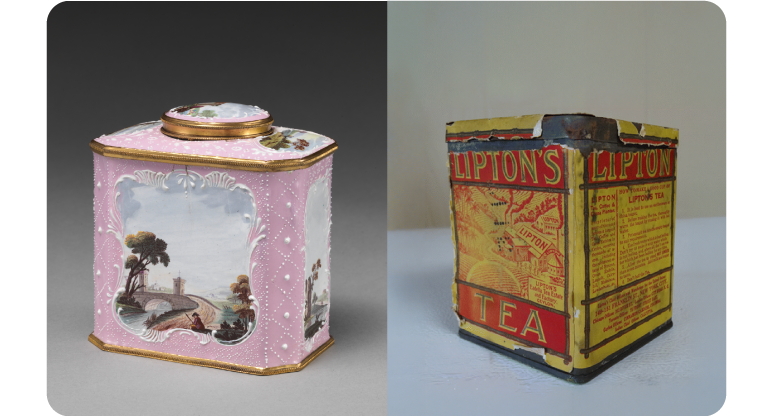
When efficiency took over, the scissors turned into orange plastic handles from Walgreens, candles became tins of paraffin with a grocery-store wick, and soap became a pale rectangle of glycerin in a cardboard box, available in quantities of eighteen for approximately nothing. Manufacturing at scale made many things more accessible, which was genuinely good.
What it didn’t do was make them worth looking at.
it started with a tea caddy
Charging a premium for beautiful everyday goods is not a recent invention. In 1738, a London silversmith named Paul de Lamerie made two silver tea caddies and a coordinating sugar box for a client, all housed in a single lacquered case. The set is now at the Metropolitan Museum of Art. Looking at it tells you more about your Aesop bottle than Aesop probably wants you to know.
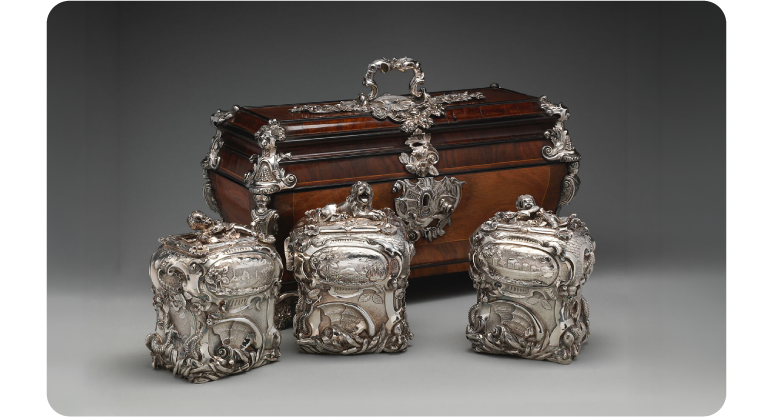
Tea arrived in Britain in the mid-seventeenth century as an expensive import, and by the time de Lamerie was making silver boxes for it, the rituals had multiplied well past the act of brewing a cup. You needed the caddy, the teapot, the cups, the covered sugar bowl, the tongs, each one telling the room something about the household that owned it. Tea parties were explicitly occasions to display wealth and taste, and the tea itself was kept under lock and key.
That lock is the significant detail. It turned the preparation of an ordinary drink into a small ceremony, and even before the leaves had been measured and the water poured, the host had already communicated everything there was to know about their own wealth and taste. The show was the point, and actual the drink had very little to do with it.
Sugar did the same thing. Before the granulated form we use today, it arrived in households as hard cone-shaped loaves that had to be broken down with tools called sugar nippers.
Prosperous households kept two versions, plain ones for the kitchen and decorated ones for the parlor, because sweetening the tea had an audience and the audience had expectations. The thing you used to make the tea became the thing you used to impress the guests.
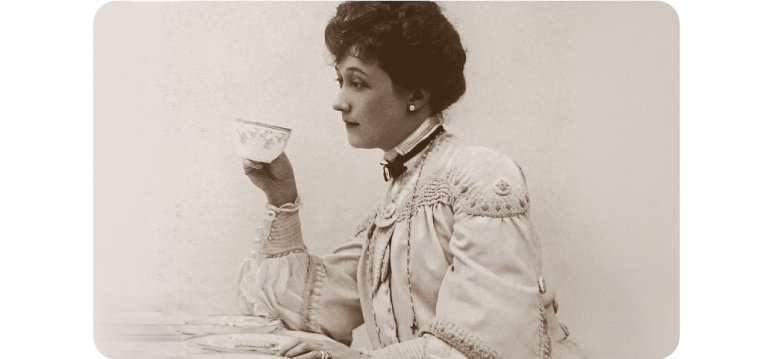
Aesop’s brown glass bottle, sitting on your sink, is doing exactly what that tea ceremony was doing.
But this history has a darker foundation. The British Museum states plainly that sugar was a driving force and catalyst for the slave trade, and the beautiful Georgian tea table was built on systems of production that were not remotely beautiful. It’s worth keeping in mind the next time a premium brand charges you extra for ethical sourcing. Beautiful domestic rituals have usually had an ugly foundation.
But that’s a story for another overthinking session.
What the tea caddy proves, as a historical object, is that the playbook Aesop has been running is older than Aesop by approximately two hundred and fifty years. Take a repeat-purchase consumable, give it beautiful housing, build ceremony around the preparation, and charge a premium that the generic version could never justify on its own.
The de Lamerie set at the Met is Aesop’s ancestor, a beautiful vessel for a repeat-purchase consumable doing social work the commodity inside could not do alone. L’Oréal paid $2.525 billion for a soap brand in 2023 because a London silversmith had already worked out the same thing in 1738 when he made a lockable box for tea leaves.
where the beauty went
This is where Aesop truly enters the story, along with Trudon, Le Labo, Byredo, Fishwife, Brightland, Flamingo Estate, and roughly fifty other brands that have spent the last two decades rebuilding the aesthetic layer of ordinary life, one refillable bottle at a time.
Aesop was started in 1987 by a Melbourne hairdresser named Dennis Paphitis, who was annoyed by the chemical smell of hair-dye products and began mixing his own essential oil formulations for the salon. The brand grew from samples handed to clients. He named it after the Greek fabulist as a deliberate dig at an industry that had always treated face cream like it carried moral weight.
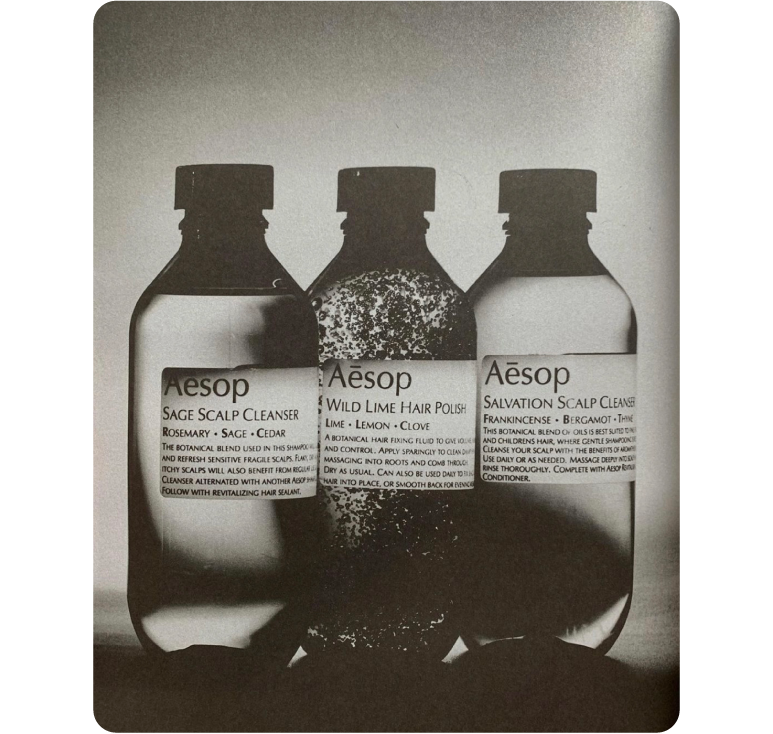
So the brand that now sells $47 hand wash with complete sincerity was named as a parody of brands that sell $47 hand wash.
Paphitis built a brand that didn’t feel like a brand. The stores felt like a cross between an apothecary and a university library, without the lighting, the mirrors, or the department store perfume smell that cosmetics retail had been running on for decades.
Product names were botanical, and the brown glass bottles looked like they belonged to a nineteenth-century pharmacist who had also, somehow, trained as a minimalist architect. There was almost no advertising, while the rest of the industry had been shouting about dewy skin and age-reversing serums since roughly 1950.
Aesop seemed to arrive from somewhere else entirely.
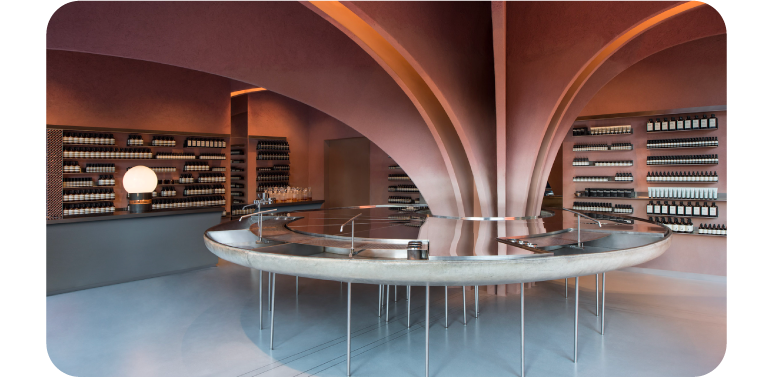
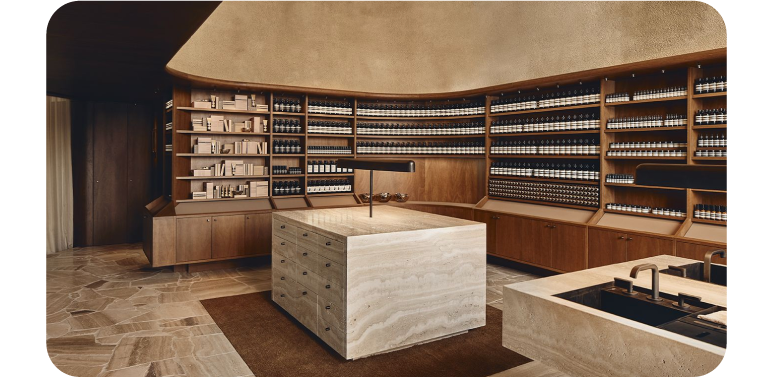
L’Oréal bought Aesop from Natura & Co in 2023 for $2.525 billion, which was at the time the largest acquisition in L’Oréal’s history. The world’s largest cosmetics company paid two and a half billion dollars for a soap brand, because the soap had accomplished something no amount of advertising budget can manufacture from scratch. It had become a marker of taste rather than wealth, and for the kind of consumer Aesop was attracting, that distinction was the whole point.
money actually can buy you class
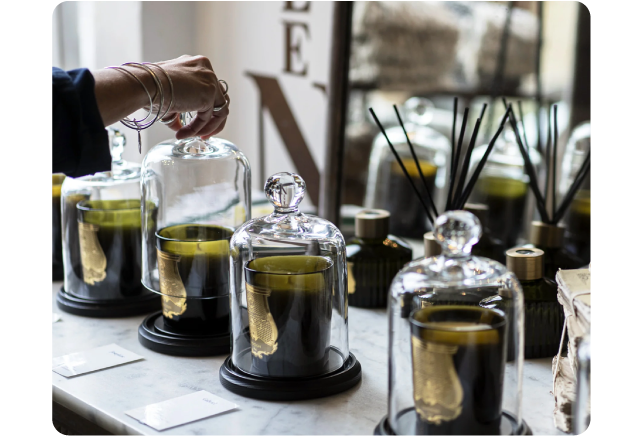
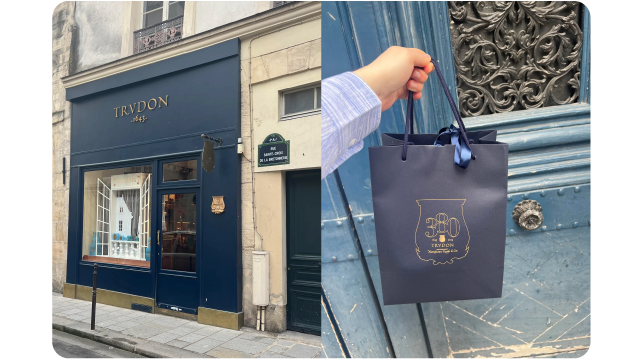
Trudon describes itself as the world’s oldest candlemaker, founded in Paris in 1643, initially as the official supplier of wax candles to Versailles and the royal court. Its current candles sell for $115 to $250 depending on size and vessel and the product is wax…wick…and fragrance. Trudon does not pretend otherwise.
Quick (and very interesting) backstory, in 1643 a Parisian merchant named Claude Trudon started making candles at a time when candles were just lighting. That was the whole job. But Trudon insisted on using 100% beeswax when most manufacturers were using animal fat, which meant their candles burned with a clean white flame instead of the dark, smoky, vaguely-rancid-smelling alternative that everyone else was selling to the French court.
That distinction alone made them the candle supplier for the kings of France and every major church in the kingdom for the next century and a half. Then the French Revolution happened and the royal family stopped needing candles (for obvious reasons), and then electricity showed up and basically made the entire product category obsolete overnight.
The Trudon brand nearly died twice in the span of a hundred years, which is the kind of origin story that most DTC founders would kill to put on their About page. They survived by doing something that their commercial director Elodie Herreria describes pretty matter-of-factly: they were the first company to scent candles for pleasure rather than function.
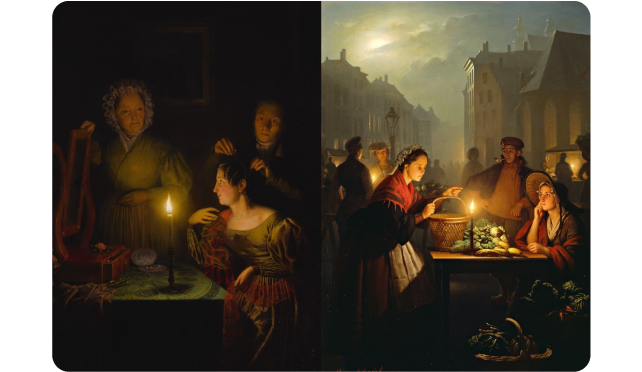
Paris was full of mosquitoes and scented candles had existed for sanitary purposes, but Trudon figured out that people would pay for a candle that smelled good for no reason other than it smelled good. They won a medal at the 1889 World's Fair for it, and nobody is entirely sure what the award was specifically for because the records are gone, which is honestly the most on-brand thing a 382-year-old candle company could do.
What the brand sells is more like atmosphere on a timer. An Atelier candle in that sage-green vessel is as much about who bought it and what they know about its heritage, as what the room smells like. The candle is telling a story, and it burns for roughly sixty hours before the story runs out and you buy it again.
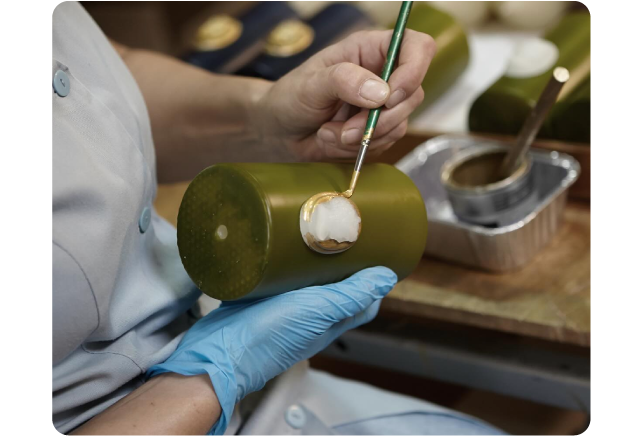
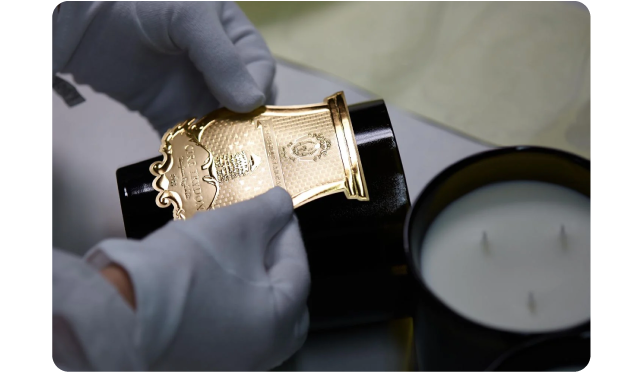
And that’s the logic that the Roulot scissors helped me finally put words to. The beautiful objects of the pre-industrial household weren’t made around generating recurring revenue. A silver tea caddy was made to be inherited and eventually passed on; the good kitchen shears lasted thirty years. There was a timelessness to the object, and not the purchase.
What modern premium brands have done, and this deserves considerably more attention than it typically receives in discussions of branding, is attach the ancient human desire for beautiful everyday life to a purchase category that depletes and refills. The products span a wide range of categories and prices, from Le Labo’s Santal 33 at $235 for 50ml to Aesop’s hand wash at $47, Brightland olive oil at $38, and Fishwife tins at $13 each.
But they all share the one thing that makes them interesting from a business perspective, which is that they run out, and when they do, the customer goes back for more.
In the language of venture capital, they have converted a latent human need (the need for daily life to feel elevated and intentional) into a recurring revenue stream. In the language of everyone else, they figured out how to sell the missing quality of modern domestic life back to the people who noticed it was gone.
buying your way to belonging
But the smartest ones aren’t only selling beauty. They’re selling something closer to permission, which is a meaningfully different product and a harder one to replicate.
Consider Fishwife as a business proposition. It sells tinned fish. Tinned fish is one of the more utilitarian pantry items available to a modern grocery shopper, and a can of anchovies from a Spanish fishing cooperative has existed, more or less unchanged, for about a hundred and fifty years.
Fishwife sells those anchovies in a cheerful illustrated tin for a price that is meaningfully higher than what sits beside it on the shelf, and the brand has been featured in the New York Times, Bon Appétit, and approximately every food publication with a readership that considers itself discerning.
What Fishwife sells is not materially better fish than you can find elsewhere. But somewhere along the way they figured out that the person buying tinned fish in 2026 isn't really shopping for dinner. They're really shopping for an identity, and the illustrated tin is the receipt.
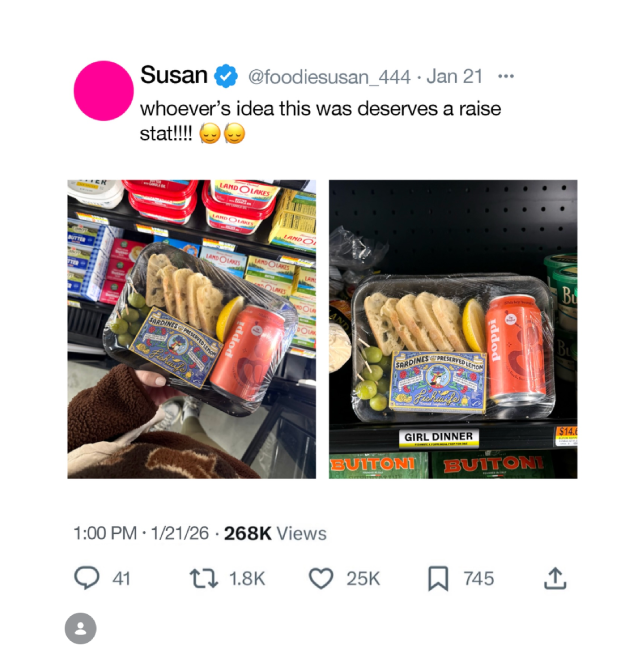
Now I’ll be honest. I bought a tin of the smoked trout, found it to be genuinely very fishy, ate about two pieces, and kept the empty box near my desk for three weeks because it looked good there. I called it “design inspiration.”
And that’s exactly how it goes.
The actual product is the permission to feel like a person who has a thoughtfully curated life and a meaningful opinion about canned fish, which converts a pantry staple into both a hosting prop and a taste credential. Those are very different things to be purchasing at the grocery store.
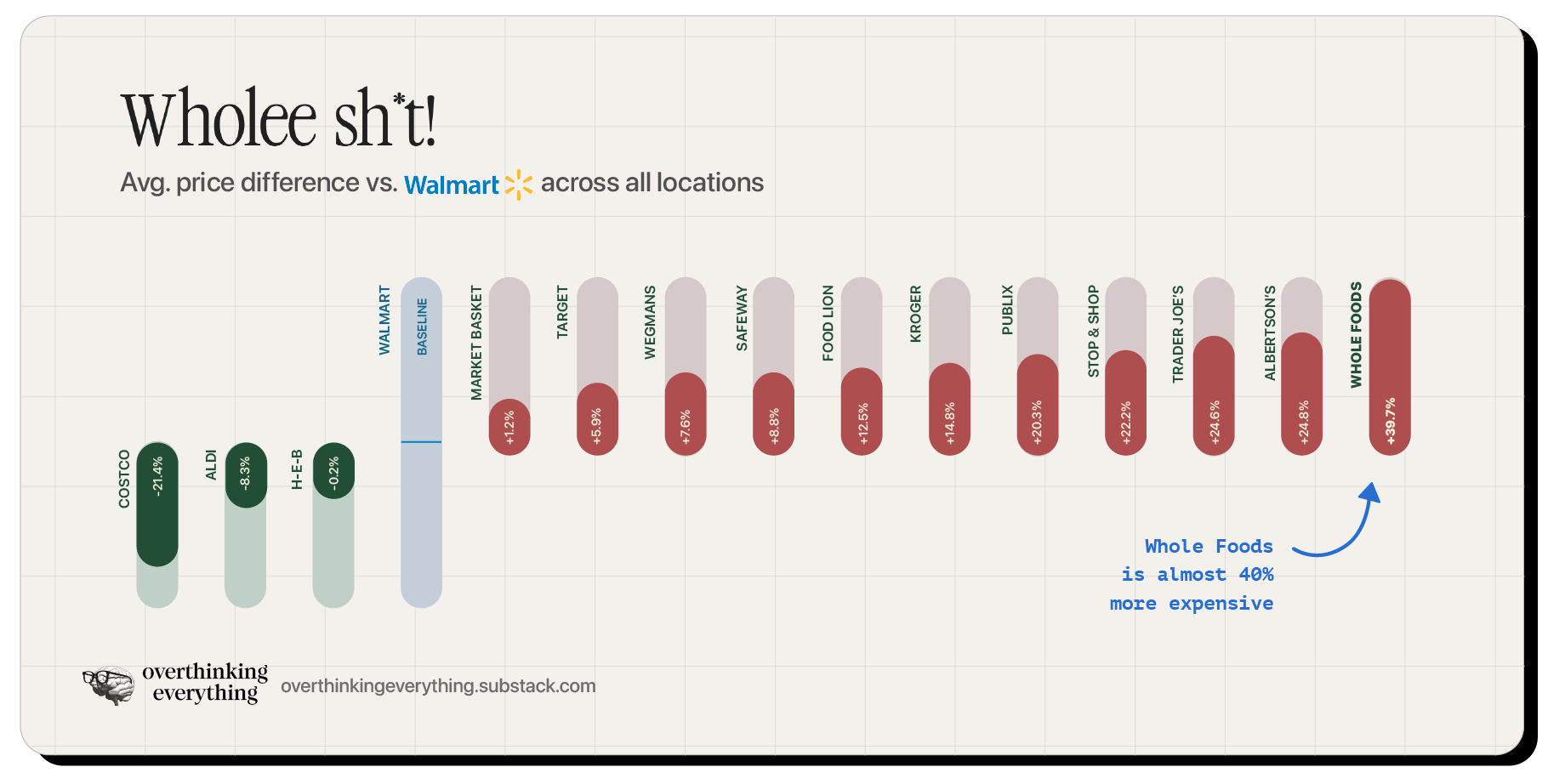
Whole Foods operates the same mechanism at basket scale. Amazon paid $13.7 billion for it in 2017, which at the time was read primarily as a real-estate and logistics play, but was also Amazon buying the feeling that comes from shopping at Whole Foods. You won’t actually eat better because you shopped there, but you’ll feel considerably less guilty about it, and for a lot of people that is the entire purchase.
The premium for that feeling, measured as a basket surcharge over conventional grocery prices, runs somewhere between 25 and 40 percent depending on the category.
One research document I read while working on this piece calls the underlying dynamic “guilt arbitrage,” and the phrase is accurate but slightly too cynical to be the whole truth. These brands do resolve discomfort, and they deliver something real while doing it.
A bathroom with Aesop on the sink genuinely looks and smells better. A room with a Trudon candle burning is a materially different room than it would be otherwise. Le Labo’s founders, Fabrice Penot and Eddie Roschi, left Armani’s fragrance division in 2006 and built a brand that did essentially the opposite of everything the industry told them to do, including the part where they blend your fragrance in front of you in the store rather than shipping it pre-bottled from a factory.
The result is a brand where buying a scent feels like something you did for yourself rather than something that was sold to you, and the relief that produces is real, which happens to be what makes these businesses so hard to replicate and so attractive to acquire.


By the time Puig, the Barcelona conglomerate behind Dior Beauty and Carolina Herrera, bought a majority stake in Byredo in 2022, Estée Lauder had already owned Le Labo for roughly eight years and Nestlé had held a majority stake in Blue Bottle Coffee since 2017.
In each case, a legacy corporate entity paid a significant premium for a brand that had figured out how to make its category feel like it had escaped being a category. The pattern is consistent enough across a decade that it now looks less like a series of acquisitions and more like a proven playbook with predictable economics.
l’oreal owns your soap now
But there is a slightly uncomfortable detail buried inside those acquisition stories. The brands being purchased are, nearly without exception, the ones that most successfully positioned themselves as an alternative to the corporate consumer goods complex. Aesop was not a luxury brand in the way Chanel is a luxury brand. It existed, consciously or not, to make you feel that CVS and Walgreens represented a failure of imagination, and that choosing Aesop was evidence you had escaped that failure.
L’Oréal, which had revenues of $42 billion in 2022 and owns brands including Lancôme, Kiehl’s, Urban Decay, Maybelline, Garnier, and CeraVe, is now the owner of the brand you bought specifically so you wouldn’t feel like you were buying an L’Oréal product.
Estée Lauder, whose portfolio includes MAC, Clinique, and Bobbi Brown, owns Le Labo. Puig owns Byredo. The indie-minimalist aesthetic that so effectively communicated independence and taste is now being managed by the same corporate architecture it was built to aesthetically oppose.
This is either the most ironic thing about modern premium branding or the most logical thing, depending on where you stand. The corporates didn’t acquire these brands because the products were dramatically superior to what they already manufactured. They acquired them because these brands had done something no advertising budget can easily replicate, which is earning the trust of a consumer who is specifically suspicious of advertising.
The soap was almost incidental to what they were actually paying for, which was the trust Aesop had built with exactly the kind of consumer who never buys from L’Oréal.
if you’re building one of these brands
For the founders reading this, the relevant question is not whether the playbook works. The acquisitions have answered that. The question is whether you understand what you are actually building, because misunderstanding the mechanism is how you end up with a beautiful object that can’t hold its margin past the first year in retail.
The first decision is category selection. And the rule is roughly the opposite of what you might expect. The opportunity is not where consumers are excited or where markets are growing. The opportunity is where consumers are slightly embarrassed by their own behavior.
Buying a product that functions fine but feels bad. A generic hand soap that sits on the sink like a small admission of defeat, or a cooking oil in a plastic jug that nobody would choose to display, or a candle that smells like nothing in particular and came in a bundle of six. Dead categories carry the most opportunity because nobody is competing for how the category feels. Brightland and Graza found a market where olive oil had been treated as a commodity ingredient for so long that the bar for making the premium legible was essentially zero, which is a much better position than entering a category everyone is already excited about.
Second, spend the money on the vessel before you spend it on almost anything else. The packaging is the product’s opening argument, and it changes the social category of what is inside it more reliably than any formulation can. Aesop’s brown glass bottles look like specimens from a dispensary that has been operating since before modern medicine, which is exactly the point.
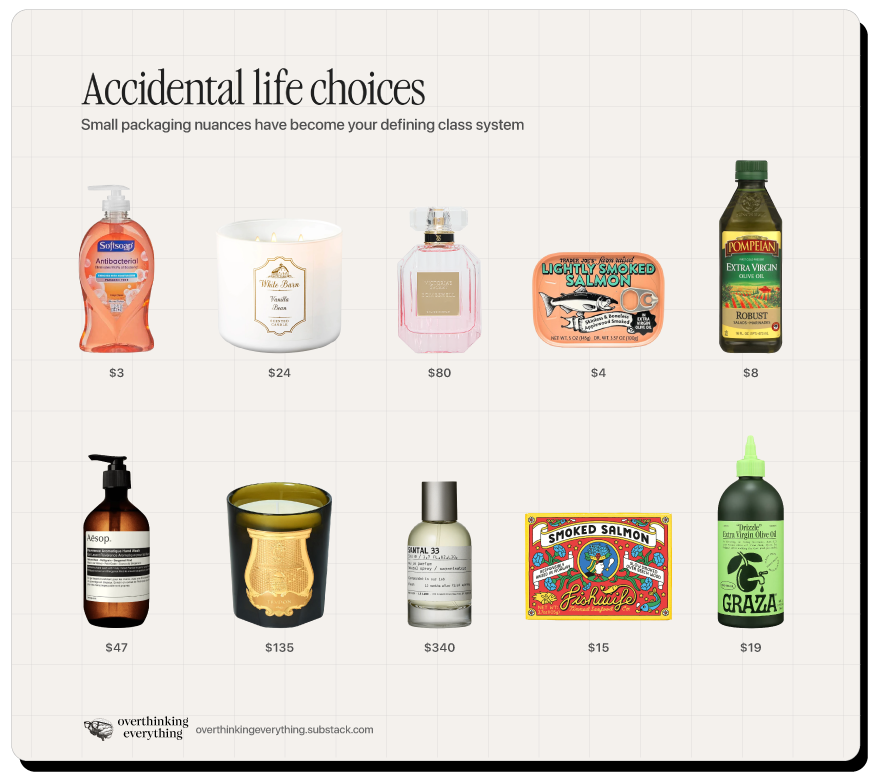
The illustrated Fishwife tin functions as kitchen décor (or my graphic design north star) before it’s ever opened. What Graza did with a squeeze bottle and the word Drizzle in the right typeface turned a cooking staple into a countertop personality. None of that is accidental, and none of it is a budget item to manage down.
Third, treat your distribution as editorial work, not logistics. Not every door is a good door, and a brand that appears in the wrong context inherits that context’s meaning. Aesop’s early placement in boutique hotels, design studios, and independent bookshops was not primarily a revenue strategy. Those environments communicated something about the brand before the brand could communicate anything about itself, and the customer who encountered Aesop in a hotel bathroom that already carried its own taste credentials arrived at the brand already half-persuaded.
Le Labo’s retail strategy was built more like museum curation than wholesale development, and the implicit argument in both cases was the same one, that if this brand appears here, it belongs to the world that includes this place, and if you want to belong to that world, here is the bottle.
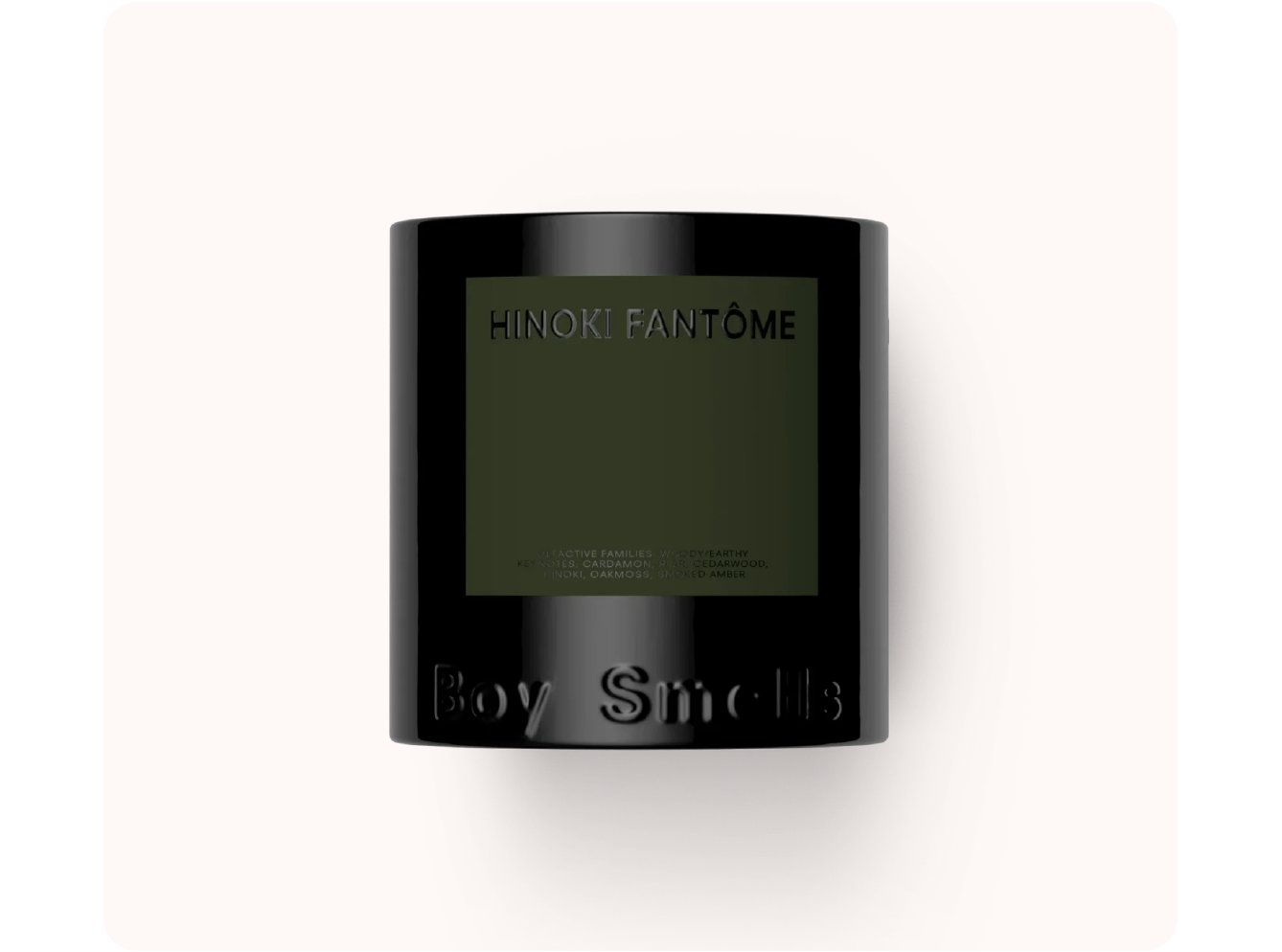
Fourth, and this is where most founders leave real margin on the table, resolve more than one discomfort at once. Aesthetic beauty alone earns a premium. Aesthetic beauty plus moral permission earns a bigger one, and aesthetic beauty plus moral permission plus a social credential that reads clearly to the right people is what earns a multiple that survives retail expansion. Boy Smells, a candle brand that launched in 2016 with explicitly genderless positioning, now appears in Sephora and in over two hundred boutique hotels.
The product is beautiful. It also resolves the lingering discomfort of buying a gendered home scent product in an era when that framing feels dated, and it says something very specific about the household that chose it, legible to anyone who knows what it is. That combination is what separates a $65 candle brand from a $12 one, and none of those layers is about the wax.
On pricing, the rule is simple and most consumer brands in this space will fail to hold it. Never discount. The moment a consumer knows that the $47 hand wash goes on sale, the $47 hand wash becomes a $35 hand wash with aspirational packaging, and what the customer was actually paying for collapses. Discounting teaches the customer that the listed price was wrong, which teaches them the whole value proposition was built on a fiction. Aesop has never run a flash sale in roughly thirty-seven years of operation, and treating that as a gap in the marketing budget gets it exactly backwards. The silence is the strategy.
☝🏽 Real quick…
I cut an entire investor teardown section from this article because it deserved its own thing. Early acquisition indicators, real multiples, the names worth watching right now, and who's buying them.
I’m not done making it pretty yet, but it will be free.
If you want it, get on the list and I’ll send it to you.
so back to those scissors…
I went back and looked at the Roulot scissors one more time. The post was from an account called Beauty Matters, and the caption read:
“Everyday life deserves beauty. Pouring unnecessary beauty into everyday tasks and objects ennobles them, and makes life special.”
I don’t disagree with any of that. What I wanted, standing at the sink the morning after that Substack scroll with a $47 bottle of hand wash in my hand, was to understand what the longing was actually pointing toward.
These brands didn’t create the longing for beautiful daily life because that’s always been a part of human existence. But what they did was figure out that the people who feel its absence will pay to address it. And that attaching that feeling to something that runs out every few months turns a very old human desire into a very reliable revenue stream.
The model only works because mass production succeeded as completely as it did. It flattened domestic aesthetics, but it also produced a consumer class with the income and an unmet desire for what it had taken away, which turned out to be the market Aesop and its descendants were built for.
The next time I buy Aesop hand wash (which I will, because even the washroom genuinely looks better with it, and because it tells my visitors a story about myself that I want them to believe. And I have apparently accepted this about myself), I will be paying for something less pronounced. I’ll be paying relief from the visual deadness of a drugstore shelf and from living in a space that has no opinion about how life should feel.
Now while I can easily talk myself into $47 soap, I’m much more curious about what’s happening at the other end of luxury, where the brands you can’t actually afford are suddenly very interested in selling you an $8 latte.
Let’s get into the real reason why every luxury brand is opening a café next.

The Roulot stork shears story is wild everyday tools once carried the same seriousness as art.