

What happened to all the "good" brands?
WTF, Allbirds?! You too??

I bought a pair of Allbirds in 2019 when they first came out. No big deal, but I know you’re probably jealous and that’s ok.
But a couple of weeks ago, Allbirds announced it had sold the brand to…wait, no. Let me do this properly.
On April 15, 2026, Allbirds agreed to sell the brand, its inventory, its receivables, its payables, and everything else that made it Allbirds, to a company called American Exchange Group for $39 million (yes, the same Allbirds company that IPO’d at a $4 billion valuation in 2021, if you’re wondering how to feel about that $39 million fire sale sellout).
I couldn’t make this birdsh*t up if I tried.

here’s what i’m overthinking
But seriously, what the h*ll happened to Allbirds
Drinking the deliciously deadly kool-aid of those 2010’s cult brands
How the high and mighty have fallen
The playbook you need to build yours better
⏲️ Read time: 10 minutes. This one goes down nice and easy.
Here, close your eyes.
I’m gonna tell you what an Allbirds store was like and just how special the brand really was.
There was this very specific, newfound feeling of shopping euphoria that came with buying a pair of their shoes. You went to the website, or if you wanted to be a real part of the cult like I did, you walked into one of their bright, airy spaces that felt more like upscale yoga retreats than shoe shops.
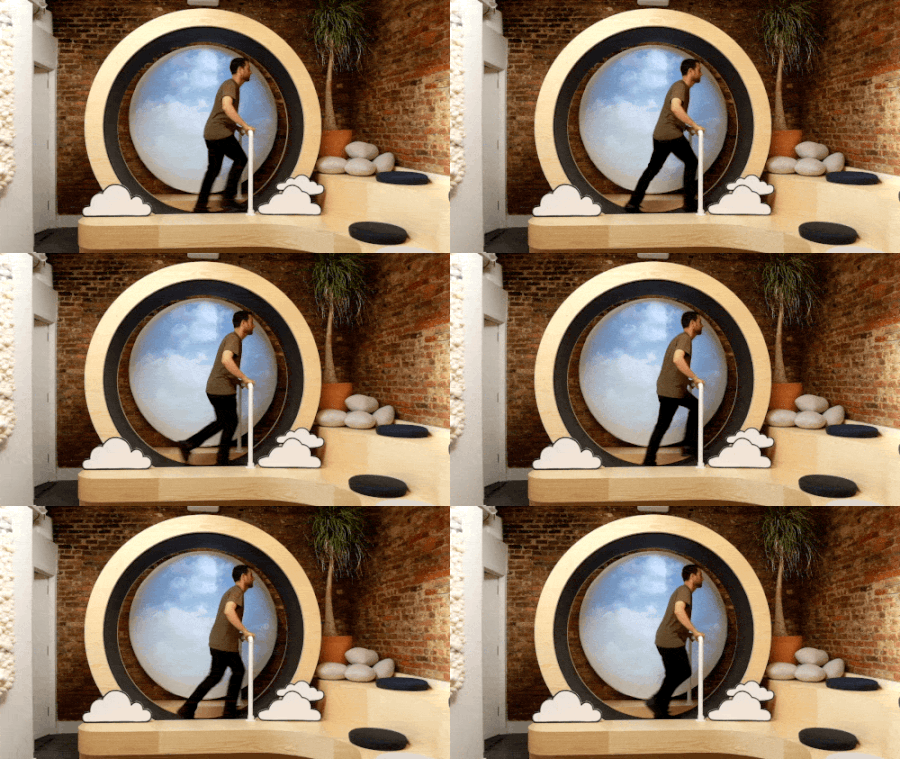
They even had a human hamster wheel to try your shoes on! There’s no better way to sell the #1 change-out-of-your-heels-for-the-subway shoe, than to remind you that they’re perfectly built for the rat race you’re currently trapped in!
But the fun didn’t stop there. Store associates wore smocks like they were anthropologists uncovering the perfect shoe for your foot alone. And the way they asked questions about your feet made it seem like you were purchasing a pair of shoes that some baby birds were constructing together like a nest in the back stockroom.
Everything felt so custom tailored and personalized.
And then came the moment when those beautifully knit works of art came out on a little conveyer belt in a big ceremonious display with your name handwritten on the box. A pure adrenaline rush!
I mean sure, they were already in a box and they came out in a few seconds so none of that baby bird stuff could’ve been real, but still. This was retail theater at its best.
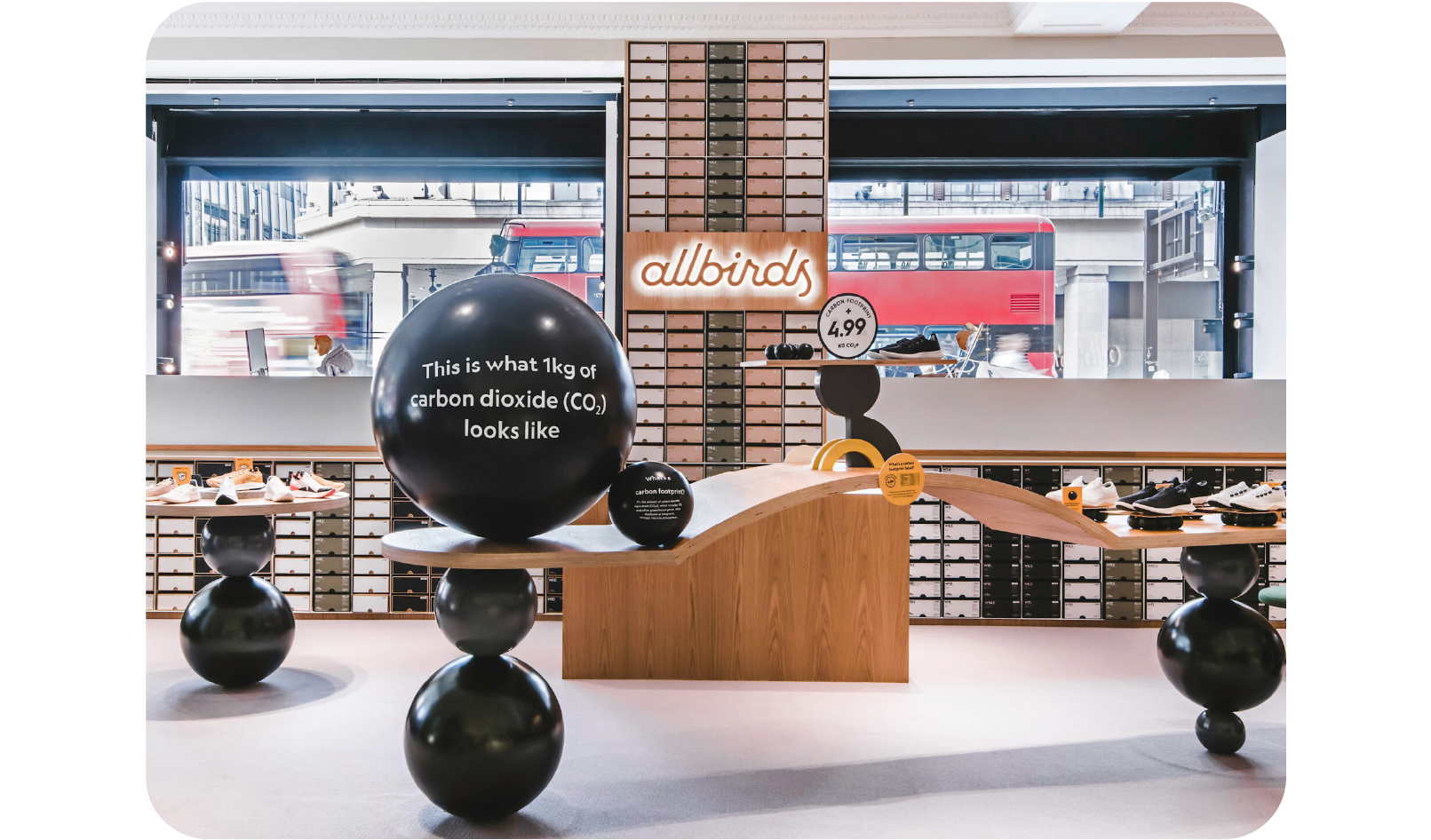
And it didn’t stop in the store. The website tracked the shoe's footprint down to the gram, printing the exact CO2e emissions for each pair right on the product page, or in some cases right on the shoe. No matter how you “joined the flock,” there was this pleasant, almost smug sensation of doing something more responsible than everyone else, while also just buying shoes you probably didn’t really need anyway.
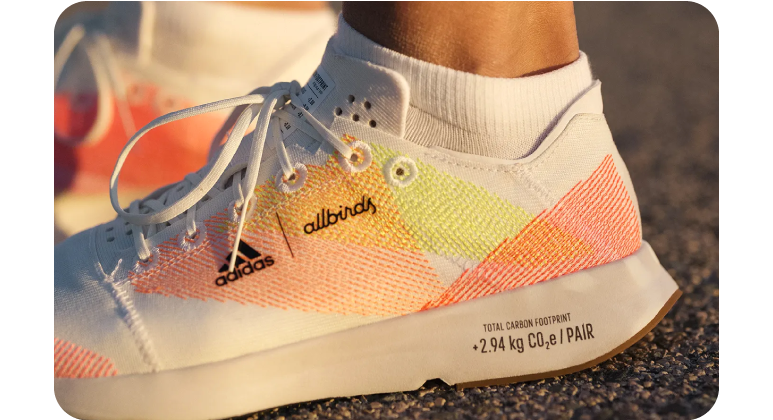
The whole Allbirds transaction was designed to communicate that in this one corner of your purchasing life, at least, you were on the right side of something. And given that in 2019 everyone was suddenly a lot more anxious and obnoxious about saving the planet, paying $125 for shoes that let you feel like you were doing something about it made a certain kind of sense.
But then there was that plot twist from the other day...
a new species we’ve never seen before
The remaining public shell of Allbirds, which now owns no brand and no product, plans to rename itself NewBird AI and use a $50 million convertible facility to buy GPU compute hardware, which is $11 million more than the actual brand just sold for.
The stock went up 872% in a single trading session on the news, which generated $3.87 billion in trading volume on a company whose market cap was under $150 million at the closing bell.
When I saw the 872% I chuckled to myself for a few seconds. Bye bye sweet birdies! It’s time for some good ol’ badass Amer’can capitalism.
Sigh.
Just as my cynicism was at its peak, I felt something a little bit more complicated that wasn’t just about Allbirds specifically, but about all those other brands who ran my credit cards all of us through the moralistic, mission-heavy wringer in the 2010’s.
I started to feel a little bit of anger about the whole category of brand they represented. It felt like all of this had been deliberately set up to fail.
the kool-aid that went down so easily
For about a decade, there was a specific type of brand that figured out how to make buying feel like an act of integrity. Allbirds and Everlane and Casper and Away and Outdoor Voices, and the grandaddy of them all, Tom’s. The moral doves of the Direct to Consumer era. They weren’t selling shoes and sweaters and mattresses and luggage and leggings and shoes in any conventional sense.
They were selling moral permission and relief from the low-grade discomfort that most of us feel when we stop to think about how much we consume and why. They filled that same hole I talked about in The Business of Beautiful Bullsh*t.
Sidenote, put that one in your stack to read next. It's about the lies we tell ourselves behind purchases like a $47 bottle of soap (and it's also one of my favorite pieces of overthinking).
But going back to the rant at hand, the thing about the products from the DTC boom era was that they were always just good enough. The prices were premium enough, the storytelling was good enough, and the store buildouts were just good enough that the transaction felt like a small vote for a better world rather than just another credit card charge.
And the pricing made the “better” feeling even more real. Allbirds’ basic wool runner was $95 to $125. Everlane’s “Radical Transparency” cashmere was $100. A Casper queen mattress launched at around $1,095. Away’s entry carry-on was $225. These weren’t budget-friendly purchases by any means, which was actually part of the whole grift.
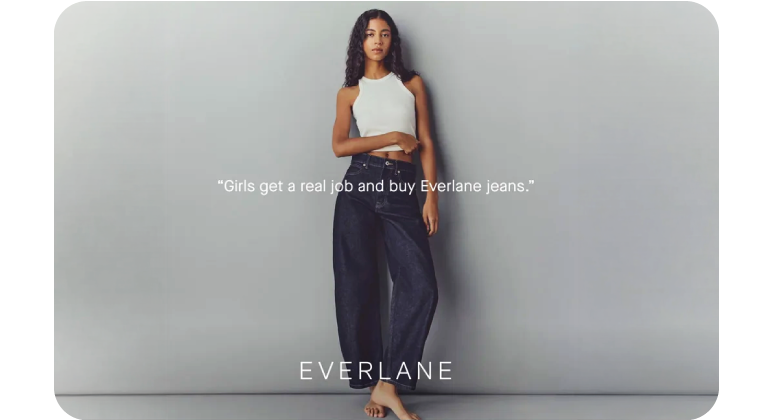
I bought almost every single one of those brands I mentioned before, because I somehow felt like I was part of a tribe of people who were making a real difference. The way they forcefully positioned themselves in a premium category that didn't really exist before created the sense that you were choosing rather than defaulting, and that you were making a statement rather than just grabbing the cheapest available option.
What I now realize is that the feeling was the actual product, and the shoes and sheets were more like the vessel it came in.
In 2021, right at the peak of all of this DTC Mania, two researchers named Melissa Wheeler and Vlad Demsar published a piece in Psychology Today about exactly what these brands were doing. They called it “virtue signaling,” which they defined as “a brand articulating its moral position to imply integrity and enhance its standing without explicitly saying it is virtuous.'“
That’s a polite way of describing the moral equivalent of working "I've been doing a lot of reading" into a conversation at brunch when nobody asked you.
People weren't just buying sneakers and razor blades and overnight bags. They were buying permission to keep consuming, from brands that promised this purchase was somehow different from all the other ones.
That feeling, that you could shop your way out of feeling bad about shopping, was real, and a whole generation of consumers had it. And the brands had figured out that selling relief from it, at a $40 markup, was a legitimate business.
What Wheeler and Demsar were careful to flag, though, is the built-in paradox. As they put it,
“While a brand can align itself with and support social causes, ultimately, its existence relies on generating revenue and profit.”
The moral product can only survive as long as it doesn't meaningfully compromise the commercial one.
Now imagine you’re a 20-something startup founder with no business school or professional experience who just wants to “make cool sh*t and do good things,” and who also just learned that there are levels to this sh*t.
Good luck with that.
Founders back then found out the hard way that it’s not as simple as slapping a logo in a modern sans serif font on some minimalist packaging with a benevolent tagline.
Wheeler and Demsar had a warning about what would ultimately bring a company like this down.
They called it "moral grandstanding," which is when virtue signaling stops reading as genuine and starts reading as a company performing respectability to sell more stuff. Their research found that skeptical consumers are actively motivated to hunt for the contradictions between what a brand claims and what it actually does.
Their advice to founders was simple.
Stop running the values like a marketing campaign, and start showing up with proof of them in every part of the company, every day, forever.
What’s really wild is that Wheeler and Demsar published this in 2021, when Allbirds was worth $4 billion and the whole category was still raising money and opening stores. Scaling that fast, with that much money means a lot of those Moral Doves are inevitably going to get left behind in the nest pretty quickly.
this doesn’t feel so good anymore
Before Apple’s iOS 14 privacy changes rolled out in 2021, a DTC brand could buy a Facebook ad targeted at a 28-to-35-year-old woman in a major metro who had been browsing sustainable fashion and had recently searched for a new mattress.
The targeting was that granular.
Brands that figured out how to reach exactly the right person with a scroll-stopping lifestyle image could grow faster than almost any generation of consumer brands in history, and customer acquisition costs stayed predictable enough that you could actually build a financial model around them.
Then Apple gave iPhone users the option to stop apps from tracking their behavior across other apps, and most of them said yes.
Facebook’s targeting capability dropped significantly and acquisition costs across DTC brands spiked. Modern Retail estimated that before iOS 14, brands were putting about 35% of their ad budgets into Facebook alone. After the change, they were paying more for worse results, which ruined the scheme that had made the whole model look like a business in the first place.
And venture capital had been doing the same thing in the background. Startup funding dropped roughly 30% in 2023 as interest rates rose, and investors started getting really frisky about when these brands were going to actually start turning a profit.
Uh oh.
For brands that had never convincingly answered that whole profitability question in their pitch deck, the answer started arriving in the form of layoffs, store closures, and restructurings.
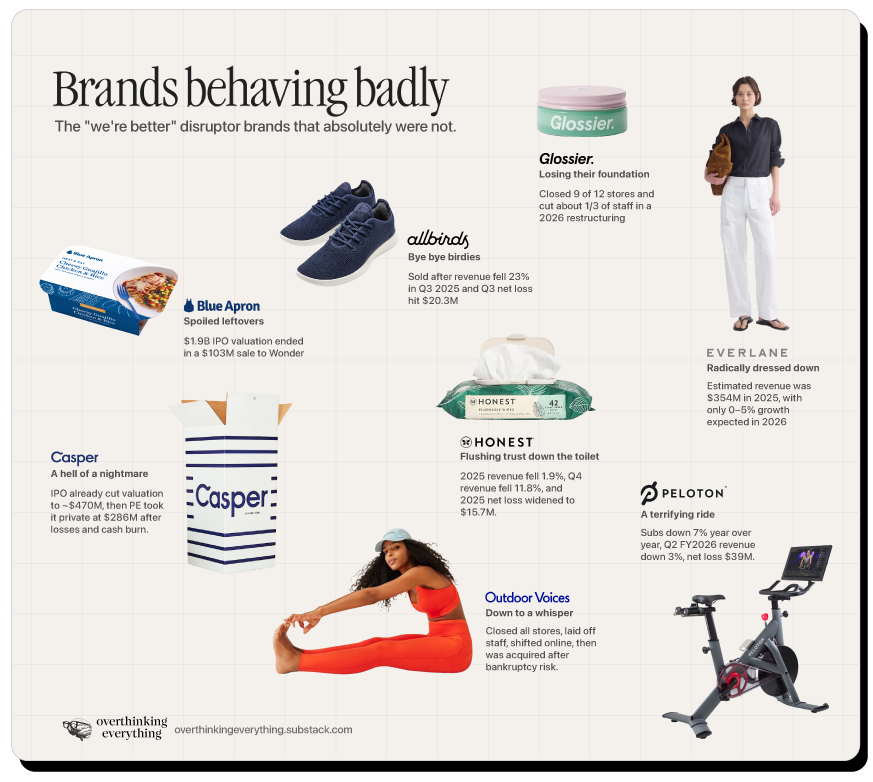
Now I don’t think most of these founders were lying about their ability to succeed, at least not at the beginning. I think they truly believed that if they could scale fast enough, the unit economics would eventually catch up to the mission. What they couldn’t account for was that the cheap capital and cheap advertising would disappear at almost exactly the same time.
how the “good” brands went bad
1. away luggage
Away built its brand on a lifestyle bigger than the luggage. Its own newsroom still describes the mission as “transforming travel and inspiring people to get away more,” which is an insane amount of responsibility to put on a carry-on suitcase.
In late 2019, The Verge published an investigation into the company’s internal Slack culture that uncovered public shaming, denied vacation, and a leadership style aggressive enough that the CEO stepped down within days. A brand that had spent four years selling travel as a path to open-mindedness turned out to be running an internal culture where open-mindedness wasn’t really on the itinerary.
And yes, I have plenty more of those cheap puns coming up in the article. You've been warned.

Away laid off 25% of its staff in a 2024 restructuring and has since rebuilt a solid business around women’s sports partnerships, celebrity endorsements (and spoofs), and White Lotus collaborations. It’s still a pretty reasonable company to run, even if it’s not what a $1.4 billion valuation in 2019 was pricing.
2. casper
At some point around 2018, I went to The Dreamery, which was Casper’s nap bar in SoHo, and paid to take a 45-minute nap in one of their pods. You checked in, changed into Sleepy Jones pajamas, got an amenity kit from Sunday Riley, and went to lie down in a circular nap pod with full Casper bedding. Bedbugs be damned! I remember thinking this was either the future of urban wellness or the most elaborate mattress ad ever conceived.


Casper was thinking about sleep as a category it could own entirely, from the bedroom to the office to the airport gate. But turns out they had a different issue altogether.
They were selling a premium mattress online with returns accepted, in a category where any competitor can copy your product in six months. They just never made the unit economics work at public-market scale. The IPO valuation was cut from a $1.1 billion private high to around $476 million at listing. Durational Capital took it private in 2022 for $6.90 a share. Carpenter, a foam manufacturer, acquired it in 2024.
3. outdoor voices
Outdoor Voices is the most interesting case in the group because the brand survived the business failing and actually came back to fail some more. Ty Haney built something real with the whole “Doing Things” ethos. The idea that movement could be joyful and non-competitive, not another optimization project, connected with people who were tired of being sold performance alongside their activewear.
The brand raised $57 million, opened 40 stores, and hit $85 million in revenue by 2018. But internally, the company was spending $45,000 on flowers and $36,000 on sparkling water while products were being marked down at Nordstrom Rack. Haney resigned in 2020, the company filed Chapter 11, and all 15 stores closed by 2024 before Consortium Brand Partners acquired it and brought Haney back as co-owner in summer 2025 to relaunch.
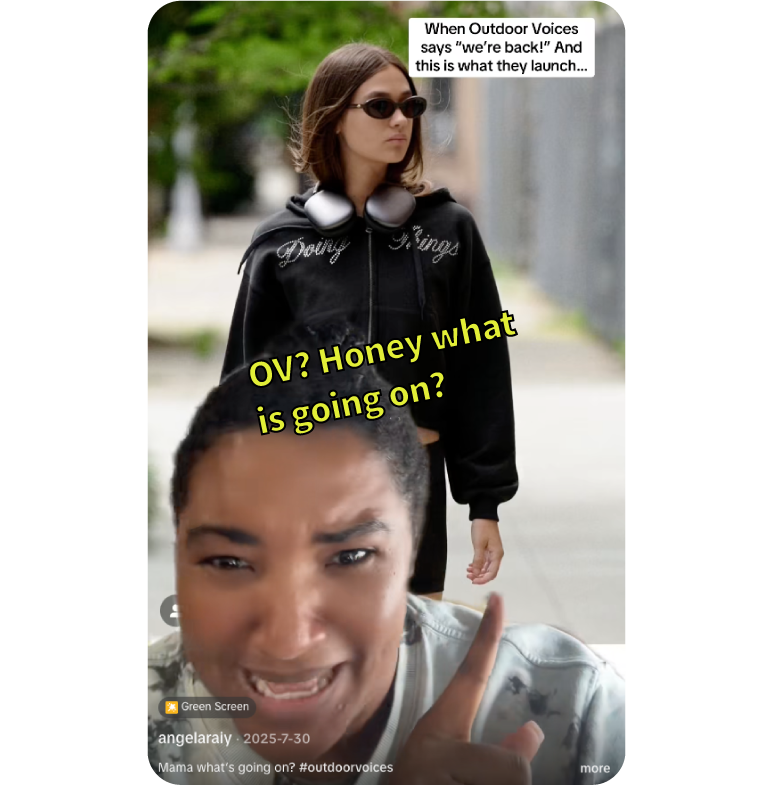
OV Redux: In October 2025, investors in Joggy, Haney’s organic energy drink venture, sued her for securities fraud, alleging she raised $3 million by pitching 20% equity at an $8 million valuation with Target expansion on the way, then diluted their stakes to 3% and misspent the funds.
Whew! That’s a LOT to take in.
Haney called it a miscommunication on IG, but we’re not going to waste our time playing jury duty on that case. The bigger story is that the product is different and the investors are different, but the allegation is the same one that runs through every brand in this piece. Somebody sold a really good story, a whole lot of money changed hands, and when push came to shove, the mission was the first thing on the chopping block.
4. everlane
Everlane launched in 2010 on a specific premise. Michael Preysman’s “Radical Transparency” meant showing customers the exact production cost of every item, the factory where it was made, and the markup Everlane was taking. No other fashion brand was doing this and I for one was completely sold.
The brand hit $100 million in revenue by 2018 and opened minimalist flagships in New York, LA, and San Francisco where the cost breakdowns were displayed on the walls. Then in 2020, a viral letter from former employees described anti-Black practices, BIPOC staff having ideas stolen, union-busting, and a culture organized around Preysman’s inner circle, referred to internally as “Foreverlaners.”
#BoycottEverlane trended and Preysman issued a statement that acknowledged the accusations without committing to a single specific change.
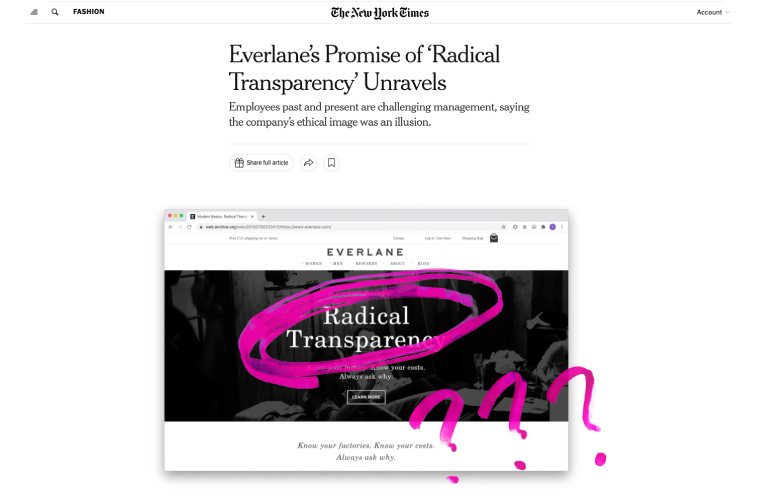
By 2022, products were getting marked down at Nordstrom Rack and stores were closing. Preysman exited as CEO in 2023 after selling a majority stake to Brentwood Associates, a private equity firm. Everlane now operates five US stores, with fewer of the cost breakdowns that once defined it, and the radical transparency that was the entire reason anyone bought in to begin with has been pretty thoroughly walked back.
5. the honest company
And then there’s The Honest Company. Oh boy…
Jessica Alba co-founded The Honest Company in 2012 after her own experiences as a new mother left her convinced that most baby and household products were full of chemicals nobody was being honest about.
Genius idea.
Her promise to parents was that diapers, wipes, lotions, and cleaners would be free from parabens, phthalates, and synthetic fragrances, with labeling transparent enough to verify.
Remarkable mission.
As you would expect, Alba’s celebrity and the real parental anxiety she was speaking to drove $50 million in sales by 2013 and a $1 billion valuation by 2014. The company IPO’d in 2021 at a $1.4 billion valuation, raising $412.8 million.
But then in 2015, a Wall Street Journal investigation found sodium lauryl sulfate, a skin irritant, in Honest’s “gentle” laundry detergent despite the brand’s explicit “no harsh chemicals” claims. Sunscreen products were pulled after lawsuits over burns, organic infant formula settled for $7.35 million over synthetic additives, and a 2017 class-action over misleading “natural” labels settled for $1.55 million.
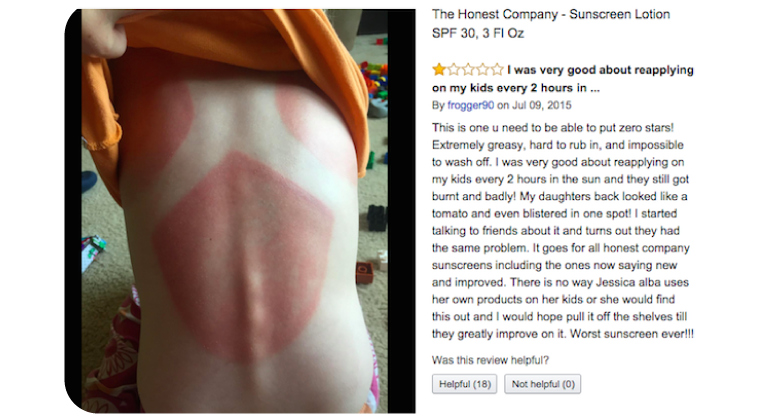
Alba stepped down as Chief Creative Officer in April 2024, and her face came off the packaging. The company still sells on Walmart and Amazon shelves and hit $100 million in quarterly revenue in 2024. The emotional premium it had been selling, that buying Honest meant protecting your kids from the chemicals in everyone else’s products, didn’t survive the lawsuit disclosures.
reverse climate change, reversed
But Honest Company at least had the dignity of getting caught by a Wall Street Journal investigation. Allbirds got caught by their own SEC filings.
Most of the brands in this piece put the mission in the marketing copy and called it a day, but Allbirds actually went further and wrote the mission into the legal structure of the company. When they went public in 2021, they incorporated as a public benefit corporation, which under Delaware law means the board has a legal obligation to weigh environmental impact alongside financial decisions, and a shareholder can actually sue them for not doing it.
That is WILD! Their mission statement became a real legal commitment, not just a brand value.
On March 31, 2023, Allbirds filed paperwork explicitly telling investors that the company’s sustainability credibility was what made customers trust them, and that without it, people would assume the company only cared about financial performance.
Then check this out. Just 15 days later, on April 15, they asked shareholders to vote to remove the legal requirement to have the mission at all, because keeping it was getting in the way of raising money.

Have you ever seen a company do this? Tell investors in writing that the mission is the whole reason customers show up, and then ask permission to delete the mission two weeks later? In SEC filings that are public and discoverable forever?
Meanwhile, the Environmental, Social, and Governance (ESG) page on the Allbirds website still said:
“From materials to transport, we’re working to reduce our carbon footprint to near zero. Holding ourselves accountable and striving for climate goals isn’t a 30-year goal—it’s now.”
Even crazier, the B Corp badge was still sitting in the footer. The customers who paid $125 for the most environmentally responsible shoes ever made never saw either filing, because nobody buying sneakers is reading SEC documents on a Saturday.
Except for me.
It's not a humble brag. It's my way of saying "is this really what my life has become…😔".
But here’s where it gets really good. Before the AI pivot announcement, Allbirds had a market cap of $21 million. On the day they announced the pivot, more than $100 million in market cap was added in a single trading session. The same investors who couldn’t price a sustainable shoe brand at more than $21 million added $100 million the second the company promised to become an AI infrastructure operator.
I guess what we’re seeing now is that nobody really even valued the shoes in the first place, and nobody really cared about the mission. After watching every other brand in this piece walk back the same promises one by one, the market was waiting for Allbirds to just show its true feathers.
See what I did there?
Ok but between me and you, the business idea is not completely insane.
GPU-as-a-Service means you buy high-performance chips and rent access to them to AI companies that can’t reliably get compute from Amazon, Google, or Microsoft, who tend to prioritize their largest, most established customers. Real AI startups struggle to get enough GPU capacity, so an independent operator that can deliver compute hours at a fair price has an actual market to sell into.
The problem is the gap between “actual market exists” and “Allbirds is the company to capture it.”
For this to work, NewBird AI has to raise significant capital, source GPUs that are both available and useful, lock up long-term power agreements, manage industrial-scale cooling, hire people who know what they are doing, and sell compute at margins that survive competing with CoreWeave, Lambda Labs, and roughly fifteen other companies raising money right now to do exactly the same thing.
It’s possible, I guess, but it doesn’t really sound like the natural second act for a wool sneaker company to me.
There’s also something absurd about this pivot that I haven’t even pointed out yet.
Allbirds built its entire brand around reducing its carbon footprint, tracking emissions down to the gram, and asking customers to believe that their purchasing choices could help reverse climate change. AI data centers are among the most energy-intensive operations in the modern economy, consuming massive amounts of electricity and requiring industrial-scale cooling just to function.
The company that once printed the CO2e measurement on the side of a shoebox is now asking shareholders to approve a business that has the capability to use more electricity in a single day than every Allbirds store on earth uses in a year.
I mean seriously, Allbirds…what the f*ck??
Buried in the proxy filing is a line where the company tells shareholders, in plain print, that going forward they will be “less focused on environmental conservation.”
That’s the actual phrasing.
From a company whose entire identity was built on environmental conservation, written to the people who funded that identity, in a legally binding document.
So now I'm sitting here wondering if any of these brands ever actually meant any of it. Did Allbirds ever care about reversing climate change, or was it always just a really good way to sell $125 sneakers to people who wanted to feel something while buying them?
Did Casper care about sleep, or did Outdoor Voices care about joyful movement, or did Everlane care about radical transparency, or were they all just running the same play with different costumes?
And once the cheap ads dried up and the cheap money dried up and the customers started catching on, did any of these founders actually care about what they had sold us?
notes for the next do-gooder
Look, if you’re building a values-driven brand and you’d like it to still be telling the same story in fifteen years, there’s a much easier way to get there, and it doesn’t involve BS platitudes like “we care more.”
Here’s what I think you should take away from the last decade.
1. be honest about what the product does without the story.
Allbirds’ main problem wasn’t that sustainability is a bad pitch. It was that sustainability, as GlobalData’s Neil Saunders put it, “has never been a key consideration for most footwear consumers,” who care about fit, style, and price. If the mission is the only reason somebody is buying your product, you’re in trouble the second the mission stops feeling believable, because there’s nothing else underneath holding the brand up.
Patagonia sells gear that outdoor recreationists actually want to use, and the environmental mission is layered on top of something people have reasons to buy on its own merits. Allbirds sold comfortable-enough office shoes, and the environmental story was just the way they justified the purchase for you.
When that story’s credibility weakened, there wasn’t much underneath it to carry the brand. Before your next raise, try to sell the product to someone who has already heard the story and isn’t moved by it. Find out what you actually have.
2. understand what you’re doing with the margin.
Mission brands charge more, and they should, because the sourcing usually costs more and the story justifies the premium. The question is what happens to that extra margin. If it goes into deeper sourcing commitments, better materials, and operational investments in the thing you said you cared about, then great. The premium becomes self-reinforcing.
But if it goes into customer acquisition on Facebook to fund the next growth cycle, it’s never going to work.
Eventually the ads get more expensive, because that is what pay-to-play ads always do. And then you’re standing in front of a proxy meeting asking shareholders to free you from the sourcing commitments you made back when the ads were cheap. Plan the capital strategy ahead of time, because nobody is going to plan it for you.
3. watch the seam between your marketing page and your cap table.
Allbirds’ ESG page and Allbirds’ proxy filing can’t both be right simultaneously, and the proxy filing is the legally binding document.
At every stage of building, the question worth asking is whether the thing you are saying publicly could survive someone reading your shareholder materials next to it. Not because you will always be able to make them match, but because understanding where they diverge tells you exactly where the brand is fragile and the pressure will eventually land.
4. know which of your investors can survive a ‘no’.
Every value-led brand eventually hits a moment where the mission-aligned decision costs something real. That could be turning down a channel that would dilute the brand, absorbing a supply chain cost when a cheaper option exists, or growing more slowly than the cap table wants.
The brands that held up through the DTC boom weren’t the ones with more virtuous founders. They were the ones whose investors had signed up for exactly that kind of ‘no’, and whose ownership structure made the ‘no’ actually stick. If your investors are expecting Allbirds growth rates and your mission occasionally requires the opposite, the marketing isn’t going to save you, and it will all come apart at the worst possible time.
On Reddit, nonetheless.
soooo…what happens next?
Well, Allbirds the shoe brand will keep going under American Exchange Group, which already owns Juicy Couture, Bandolino, and Anne Klein. So you’ll still be able to get your wool runners on the Allbirds website…and if you’re lucky, you might even be able to say, “I got ‘em at Ross!”
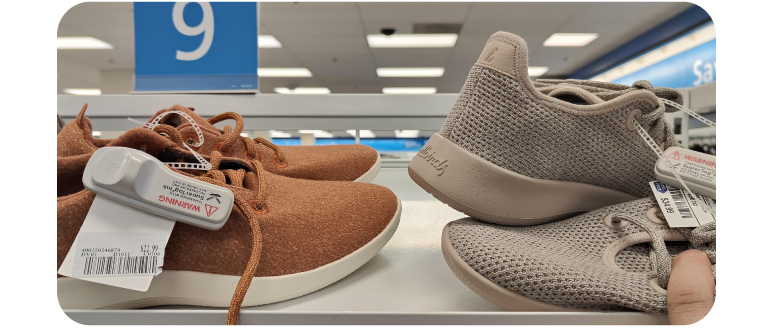
I do wonder what will happen to the carbon footprint page on the Allbirds website, though. My guess is that updating it for the new business model’s output probably won’t be a priority for a licensing house that runs a portfolio of heritage brands.
Meanwhile, NewBird AI is off trying to become a GPU leasing business, which is a real market with real demand, but is not the kind of market that a wool sneaker company has any business trying to walk into.
Honestly, I’m not sure any of this was ever going to end differently. These brands all came up at a very specific moment with cheap Facebook ads, cheap venture money, and a generation of anxious millennial consumers willing to pay a premium to feel like they were doing something good with their dollars. That’s the perfect storm of shaky foundations that would be hard for any founder to resist.
My Allbirds are still in a box in my storage unit, which I realize is its own small metaphor for something, though I am not entirely sure what.
I’ve been meaning to donate them. I keep forgetting.
Anyway, if the Allbirds story has you all worked up and let down at the same time, I have one that might actually make you think a little bit differently.
Next week I'm overthinking how rhode pulled off a $1B exit in 35 months, and my journey into the depths of a thrilling Reddit thread where nobody wanted to admit Hailey actually built it.
Let's get into it…
